

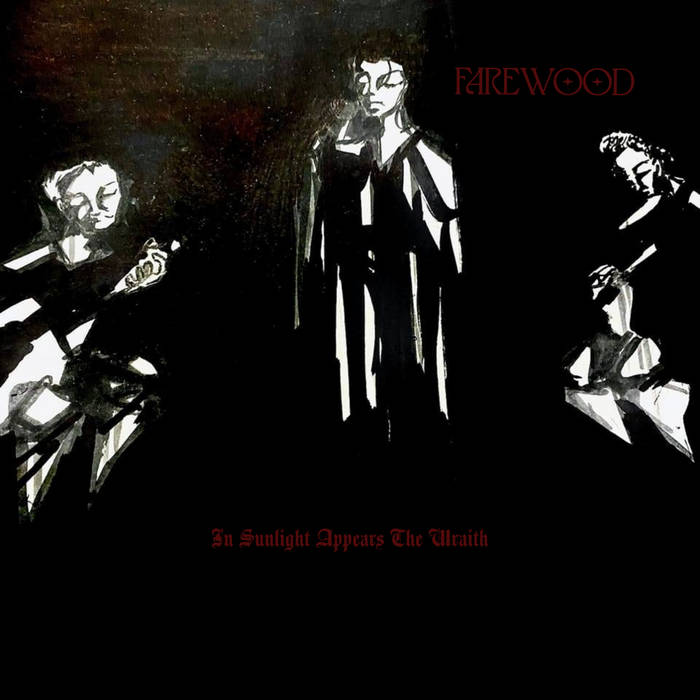
Farewood Illuminate the Unseen on In Sunlight Appears The Wraith
From Meriden, Connecticut, Farewood unveil In Sunlight Appears The Wraith, an album released on January 23, 2026 that drifts gracefully between dream pop and dream rock, guided by atmosphere, restraint, and emotional nuance. Rather than chasing immediacy, the record reveals itself slowly, inviting listeners into a world where light and shadow coexist, and where clarity often emerges from softness rather than force.
At its core, In Sunlight Appears The Wraith is an album about presence and absence. Farewood build their sound around space, allowing melodies to breathe and textures to linger. Guitars shimmer rather than dominate, keys and piano surface gently, and rhythms feel deliberate and unhurried. The album carries a spectral calm, true to its title, suggesting forms that only fully appear once you stop trying to grasp them.
Vocally, Leah Booker Lorenzo provides the emotional anchor of the record. Her voice moves with quiet confidence, never overstated, carrying a sense of intimacy that feels both grounded and distant. She also takes on bass duties on track seven, reinforcing the album’s collaborative yet focused spirit. Her performances feel central to the album’s emotional coherence, guiding the listener through its shifting moods with subtlety rather than drama.
Much of the album’s sonic architecture is shaped by Lou Lorenzo, who handles guitars, bass, keyboards, drum arrangements, and backing vocals on selected tracks. His layered approach gives the record its depth and continuity, weaving melodic threads that recur and evolve across the album. The arrangements feel carefully considered, balancing repetition and variation to maintain immersion without stagnation.
Eric Ieraci’s guitar work adds further texture and dimension, contributing lines that blur and glow at the edges of the mix. On track seven, Ed Diaz’s piano introduces an additional layer of warmth and fragility, momentarily pulling the album into a more exposed emotional space before dissolving back into the surrounding haze. These contributions feel purposeful and well-placed, enhancing the album’s sense of flow rather than interrupting it.
Stylistically, In Sunlight Appears The Wraith sits comfortably within dream pop and dream rock traditions, yet it avoids leaning too heavily on nostalgia. Farewood favour mood over reference, allowing emotion and atmosphere to define the record rather than genre signifiers. There is a gentle tension throughout, a sense that the songs are holding something just beneath the surface, never fully revealed, yet constantly felt.
What makes the album particularly compelling is its cohesion. The tracks feel interconnected, bound by a shared emotional temperature and sonic palette. Rather than building toward obvious climaxes, Farewood let the album exist as a continuous environment, encouraging listeners to move through it as a whole rather than extracting individual moments.
Within the wider dream pop landscape, In Sunlight Appears The Wraith stands as a quietly confident release. It is introspective without being insular, atmospheric without becoming vague. Farewood demonstrate a clear understanding of restraint as a creative tool, trusting subtle shifts in tone, melody, and texture to carry meaning.
In Sunlight Appears The Wraith is an album that rewards stillness and attention. It lingers, gently haunting, revealing its depth over time rather than on first impact. For Farewood, it marks a refined and assured statement, one that suggests a band fully comfortable operating in the soft glow between light and shadow.
© Thusblog