
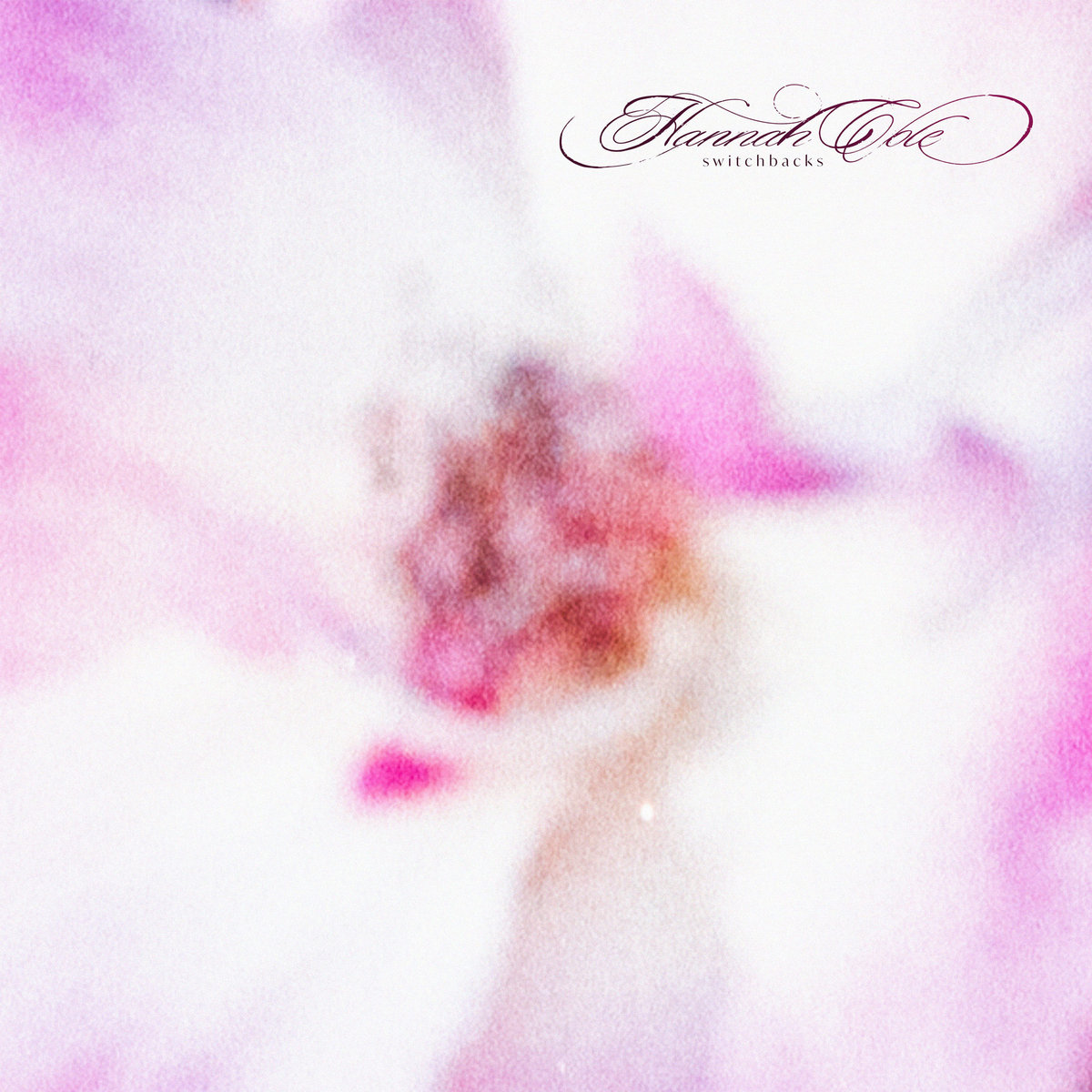
Hannah Cole - Switchbacks
There is a wonderfully simple image at the centre of Hannah Cole's debut album. A switchback road climbs a mountain without ever travelling directly towards the summit. It turns, doubles back, temporarily appears to move in the wrong direction and frequently hides whatever lies around the next corner. Progress continues, but from inside the car it does not necessarily feel like progress at all.
For a young musician attempting to build a career in an industry obsessed with visible momentum, numbers and measurable success, it is difficult to imagine a more appropriate metaphor.
Released on September 4, 2026, Switchbacks is the first full-length album from the American singer-songwriter and musician originally from Covington, Louisiana, and now based in Nashville, Tennessee. Across ten songs and approximately 33 minutes, Cole examines ambition, uncertainty and the peculiar transformation that occurs when making music changes from something you simply love doing into something that must somehow support a career. Around those questions, she has also constructed her biggest and most confident music so far, pushing the dreamy bedroom pop of her earliest recordings towards alternative rock, grunge, shoegaze and slowcore without sacrificing the melodic instinct that has always existed underneath it.
Cole began releasing music in 2020 with “Clothes,” at a time when her songs were still largely associated with intimate bedroom pop. The subsequent EPs Cradle in 2022, Big Bite in 2023 and Glisten in 2024 gradually changed those proportions. Guitars became louder, distortion occupied more space and the softness of her voice increasingly found itself surrounded by instrumentation carrying considerably more physical weight.
Switchbacks feels like the point where that evolution becomes complete enough to constitute a new musical identity.
The album's guitars can be enormous. Fuzz and distortion frequently accumulate until the songs approach the blurred density of shoegaze, while the rhythm section gives the heavier passages something much more physical than Cole's early recordings suggested. There are understandable connections with artists such as Bully and Soccer Mommy, alongside traces of The Breeders and DIIV, but what prevents the album from becoming simply another exercise in 1990s alternative-rock nostalgia is the clarity of Cole's songwriting.
However noisy the surrounding environment becomes, she rarely loses the melody inside it.
That contrast between a soft, luminous voice and increasingly abrasive guitars is one of the album's greatest strengths. Cole does not attempt to compete with the distortion by becoming louder herself. Instead, her voice often seems almost strangely calm while the music around it expands, producing the sensation of someone trying to maintain a clear internal dialogue while the external world becomes increasingly difficult to control.
That relationship fits the subject of Switchbacks particularly well.
Cole studied songwriting at Belmont University in Nashville, where she encountered two very different possible futures. One involved commercial songwriting and music created for areas such as synchronisation, while the other required the considerably less predictable decision to develop herself as an artist. After experimenting with the first route, she gradually realised that her own experiences and observations made more sense when she was the person expressing them.
Choosing the more personal path did not, however, make the practical questions disappear.
If anything, it created more of them.
How much should an artist change in order to become commercially viable? How long can somebody continue investing money and energy without knowing whether the investment will ever be returned? At what point does determination become self-destructive stubbornness? Most importantly, how do you protect the pleasure of making music once every song also becomes part of a professional strategy?
These questions provide much of the emotional architecture of Switchbacks.
The opening title track immediately establishes both the metaphor and Cole's expanded sound. The guitars are broader and considerably more distorted than those surrounding her earliest songs, occasionally approaching the overwhelming texture associated with shoegaze, while the melody underneath remains unmistakably pop.
The song imagines travelling through the mountains and looking through a windscreen marked by insects. It is an ordinary, slightly unattractive image, but it becomes surprisingly effective in the context of the album. The destination remains somewhere ahead even when the immediate view has become obscured.
You continue driving.
The Blue Ridge Mountains and their winding roads consequently become more than scenery. They provide Cole with a way of reconsidering the conventional language surrounding artistic careers. Success is usually described vertically, with musicians rising, climbing and reaching another level. Switchbacks accepts the mountain but rejects the idea that there must be a straight road to its summit.
Sometimes moving forward involves travelling sideways.
Sometimes it even looks like going backwards.
“MMA”, released as the album's first single in July 2026, turns the same anxiety into something considerably more confrontational. Here the music business becomes part combat sport and part gambling table, with Las Vegas providing an appropriate landscape for the feeling that pursuing a musical career requires repeatedly betting on yourself without knowing whether the next wager will finally pay off.
The music responds with some of the heaviest guitars on the record. Grunge and shoegaze textures surround a melody that remains almost deceptively relaxed, creating another of Cole's characteristic contradictions. The anxiety is enormous, but the voice describing it refuses to become hysterical.
At the centre of MMA is a question that extends throughout the album: when the conventional route does not appear to be working, do you invent another one or stop travelling altogether?
“Pitcher” approaches the same uncertainty from the opposite direction. Instead of movement, it deals with paralysis. Cole has described reaching a period where the amount of work required to advance her career became so overwhelming that she struggled to do anything at all. Questions about whether she needed to alter her image or personality in order to become more marketable only increased that feeling.
The different meanings and associations surrounding the word pitcher allow the song to transform stagnation into images of water, containers, overflow and movement. It is a clever way of describing an experience familiar far beyond the music industry: having so many possible directions available that choosing one becomes almost impossible.
Industry frustrations become more explicit around “Give” and “Mechanical Bull.” Cole's experiences as a young woman within a business that frequently presents itself as progressive have left her conscious of the distance that can exist between declarations of support and meaningful action. The mechanical bull becomes another particularly effective metaphor for the instability surrounding an emerging artist.
You are encouraged to stay on while the thing underneath you is specifically designed to throw you off.
Yet one of the smartest decisions Cole makes with Switchbacks is refusing to allow these frustrations to dominate the entire record. If the album remained exclusively concerned with career anxiety, its critique of the music business could easily reproduce the very problem it is describing by allowing professional ambition to consume everything else.
Instead, the record gradually begins searching for the pleasure that existed before those questions became so important.
Cole has described dreams, reality and dancing as three central ideas surrounding the album, and dancing becomes particularly significant because it can represent both genuine physical pleasure and performance. An artist dances because music creates movement, but she can also find herself performing a version of happiness because an audience expects one.
“Dancing” occupies that uncertain space between the person and the performer, where enjoying the moment and presenting an image of enjoyment can become surprisingly difficult to separate.
The brief “100 Bucks” leads almost directly into “Shooting Star,” with the two songs conceived to work almost as a sequence in live performance. It is another example of the attention Cole has given to the architecture of the album. Although every song has its own character, Switchbacks is not simply a collection of ten unrelated singles assembled because enough material existed to make an album.
There is a journey taking place underneath them.
Much of the record was created between 2024 and 2025 in the home studio Cole shares with her partner and collaborator Josef “Jos” Kuhn. Both musicians performed a significant proportion of the instrumentation, while Cole became more involved in production than she had been on previous releases. Sonny DiPerri, whose credits include American Football, Wisp and julie, handled the mixing, with Alec Ness responsible for mastering.
That combination helps explain why Switchbacks can sound intimate and enormous almost simultaneously.
Its foundations were constructed in a personal environment, but the finished production allows the guitars to occupy an impressive amount of physical space. The home-studio origins have not been polished out of the record so much as expanded, giving Cole's songwriting a scale it previously only suggested.
Nowhere is the album's circular structure more apparent than on “Mosquito Hawk.”
At almost six minutes, it is considerably longer than most of the record and slows the pace towards something approaching slowcore. Cole has described it as a kind of inverted reflection of the opening title track, and that relationship is reinforced by reversed tape sounds that seem to pull the album backwards through its own history.
If Switchbacks begins by looking towards the road ahead, Mosquito Hawk turns around.
The destination is no longer the next professional achievement. Cole instead returns mentally to a period when music existed primarily because making it was enjoyable, spontaneous and emotionally necessary. Before streaming statistics, marketing strategies, industry expectations and career planning entered the picture, there was simply the excitement of creating something.
This is arguably the emotional centre of the entire album because it changes the meaning of the journey.
The objective is no longer simply reaching the top of the mountain. It is remembering why climbing it seemed worthwhile in the first place.
That realisation gives the closing “Every New Day” a particular significance. The song does not need to provide a definitive solution to the problems raised throughout the previous nine tracks. Artistic careers remain uncertain, industries remain contradictory and there will always be another corner whose destination cannot yet be seen.
What changes is Cole's relationship with that uncertainty.
The album begins with the desire to progress and gradually discovers that progress itself may need to be redefined. A career does not necessarily become meaningful because the numbers become larger, just as a road does not cease moving towards its destination because it temporarily turns away from it.
Musically, that journey also explains why Switchbacks feels like such an important record for Hannah Cole.
Her original indie-pop instinct remains completely intact, but she now appears considerably more comfortable surrounding it with sounds that might once have threatened to overwhelm it. Fuzz, grunge guitars, shoegaze density and slower atmospheric passages have become extensions of the songwriting rather than stylistic decorations.
The melodies still provide the map.
The guitars simply make the landscape more dramatic.
This places Cole somewhere within the increasingly fertile territory connecting contemporary indie pop, alternative rock, bubblegrunge, shoegaze and slowcore, but the terminology matters less than the balance she has found between those elements. She can write a chorus that immediately sticks while allowing the guitars surrounding it to become almost abrasive. She can move towards slowcore without abandoning pop structure and borrow shoegaze's density without allowing the song itself to disappear inside the effects.
For a debut album, Switchbacks is therefore less concerned with announcing Hannah Cole's arrival than documenting her uncertainty about what arrival is actually supposed to mean.
That makes it considerably more interesting.
There is no triumphant story here in which persistence automatically produces success, nor a cynical conclusion suggesting that artistic ambition is fundamentally pointless. Instead, Cole recognises something messier and probably more truthful. Creative lives rarely move in straight lines, and the moments that appear to be detours can eventually become the parts that determine where somebody ends up.
The road bends, visibility changes and occasionally you discover that you have been travelling in what appears to be the wrong direction.
But the mountain is still there.
With Switchbacks, Hannah Cole has made an album about learning that progress does not always look like progress while you are living through it, and that sometimes the most important reason to keep moving is not whatever might be waiting at the summit, but remembering why you wanted to make the journey at all.
© Thusblog
Listen on Qobuz (Hi-res 24 bit)