
Sunstinger Find Strange Comfort Inside the Darkness on Spare Me the Rapture
Some music sounds inseparable from the place that created it. On Spare Me the Rapture, Scottish quintet Sunstinger seem to absorb the landscape around them directly into their guitars. The scars of post industrial Scotland, abandoned structures slowly surrendered back to nature, grey skies, rusting metal and unexpected beauty all seem to exist somewhere inside these six songs. The result is a record that feels simultaneously crushing and dreamlike, romantic and oppressive, euphoric and emotionally exhausted.
Rather than defining themselves through a convenient list of musical references, Sunstinger increasingly appear shaped by environment, memory and atmosphere. Their music has always existed somewhere between shoegaze, dream pop, noise rock and post punk, but Spare Me the Rapture pushes each of those elements considerably further. The guitars are heavier, the rhythms more urgent and the emotional extremes wider than before.
The current lineup brings together Taylor Wright on vocals and guitar, David McCulloch and Scott Gourlay on guitars, Bill Anderson on bass and Colm Boyle on drums. Boyle joined at the beginning of 2026, and his arrival seems to have introduced a new physical momentum into the group. The songs now move with greater force, giving the enormous guitar arrangements something solid to push against.
That matters particularly with a band using three guitars. Sunstinger do not simply stack identical layers until everything becomes indistinguishable. Instead, each guitar seems to occupy a different part of the landscape. One carries melody, another provides weight and fuzz, while the third drifts through reverse reverbs, modulation and more abstract textures. The result is less a conventional wall of sound than a constantly moving architecture.
Across Spare Me the Rapture, the band also approach the EP as a complete work rather than six unrelated songs. There is a clear emotional trajectory, beginning in numbness and repetition before moving through panic, fragmented memory, emotional absence and finally the strange psychological territory of sleep paralysis.
At the centre of it all is the idea of finding comfort inside misery. Not escaping pain, necessarily, but becoming so accustomed to it that darkness begins to feel familiar. There is something unsettling about that concept because it captures the point where melancholy stops feeling temporary and starts becoming a room someone has learned how to decorate.
Opening track Zerosum immediately demonstrates the increased ambition of the record. A rising mass of noise eventually parts to reveal chiming guitars and enormous reverb, briefly allowing beauty to emerge before the arrangement collapses beneath increasingly heavy rhythmic stabs and waves of fuzz.
The dynamics are extreme but carefully controlled. Layers of guitar appear and disappear deep inside the mix, sometimes barely perceptible, giving the impression of distant voices trapped behind the distortion.
Lyrically, Zerosum reflects the numbness of repetition, those periods when one day begins to dissolve into the next and tomorrow becomes merely another version of today. A lyrical reference back toward Beyond the Frame adds an especially effective sense of continuity. Where earlier Sunstinger material searched beyond the boundaries of experience, Zerosum feels completely immersed within them.
The title track follows with perhaps the clearest indication of how far the band have moved forward. Spare Me the Rapture is faster and more immediate than much of their earlier work, introducing almost alternative rock sized hooks without sacrificing the textural complexity at the centre of their identity.
The opening guitar exchanges provide an immediate melodic hook before Colm Boyle's rapid snare announces the chorus. When it arrives, the effect is enormous. Taylor Wright's vocal pushes upward through layers of distortion rather than disappearing beneath them, giving the song an emotional centre strong enough to compete with the surrounding noise.
Bill Anderson's bass performs an equally important role. With three guitars constantly moving across the arrangement, the bass becomes the gravitational centre holding everything together. It gives the track weight and direction while fuzz, reverse reverb and modulation spiral around it.
The title also captures the philosophy running through the EP. Rapture traditionally implies transcendence, salvation or some form of ecstatic escape. Sunstinger seem suspicious of the promise. Instead of waiting for deliverance, the song accepts the damaged environment already surrounding the narrator and attempts to survive within it.
The industrial landscape of Glasgow becomes particularly important here. Images of iron and environmental decay become part of a wider exploration of belonging, inheritance and the difficulty of carving out an identity inside places whose histories remain physically visible.
Needrr refuses to reduce the intensity. Its opening carries an almost punk driven momentum, propelled by drums that push the track aggressively forward before the verse suddenly drops into something far more spacious and unstable.
That contrast perfectly mirrors the emotional content. The song moves between emotional detachment and suffocating anxiety, the strange psychological state where numbness can suddenly collapse into panic without warning. Even during the calmer passages, Boyle's drums continue underneath like an internal pulse that refuses to slow down.
As the track progresses, the guitars become increasingly fractured. Notes bend and distort, rhythms seem to lose their footing and the arrangement begins to resemble an overloaded mind attempting to process too much information simultaneously.
After the density of the opening half, I Think I Half Remember offers one of the EP's most unexpected expansions. Built primarily from guitars and vocals, with acoustic guitar supplying much of the rhythmic motion, the song feels almost weightless.
Electric guitars melt around one another until their boundaries become impossible to identify. Rather than riffs, the listener hears waves. Sounds overlap, retreat and return, producing one of the record's most overtly dreamlike moments.
The lyrics reflect that instability. Taylor Wright incorporates fragments inspired by the poetry of D. H. Lawrence alongside his own writing, using a collage like technique to blur the distinction between coherent memory and dream logic. The result makes partial sense in precisely the way fading memories often do. Certain images remain clear while everything connecting them has disappeared.
Barely Here feels especially significant because of its collaborative development. Beginning from a demo before being reshaped collectively through rehearsal and recording, the track demonstrates how Sunstinger's individual strengths combine.
It creeps slowly into view through abstract textures before a solitary kick drum signals the weight waiting underneath. When the guitars finally arrive, they are enormous without becoming shapeless. Anderson's distorted bass gives the track additional physical force, locking closely with the kick and allowing the guitars to expand above it.
The middle section briefly withdraws before the entire band erupts simultaneously. The effect is almost geological, a sudden collapse followed by the euphoric return of the chorus. Sunstinger are especially good at making release feel earned, and Barely Here provides one of the EP's clearest examples.
Closing track Always Green introduces another new texture with its massive drums and reversed gated sounds. Lyrically, it draws from Taylor Wright's experiences with sleep paralysis, that terrifying state where consciousness and dreaming overlap while the body remains temporarily inaccessible.
It is an ideal subject for Sunstinger. Their music has always occupied spaces between states, beauty and abrasion, waking and dreaming, comfort and anxiety. Here those contradictions become almost literal. The arrangement feels simultaneously physical and unreal, surrounding a lyric concerned with being trapped between different forms of consciousness.
The EP was recorded at Organic Audio in Glasgow with producer Sean Mitchell, but rather than using the studio as an opportunity to reinvent their equipment or excessively refine their sound, Sunstinger made the deliberate decision to capture the band as they actually perform.
That choice proves crucial. Spare Me the Rapture sounds enormous, but it never feels artificially enlarged. The guitars retain physical texture, the drums hit with genuine force and the rhythm section maintains the suffocating momentum associated with the band's live performances.
That live philosophy is central to Sunstinger's identity. Their concerts reportedly avoid unnecessary interruption, allowing atmosphere to build continuously until the audience is completely surrounded by volume, fuzz and reverb. The EP captures much of that same sensation. It does not simply present songs. It creates an environment and asks the listener to remain inside it.
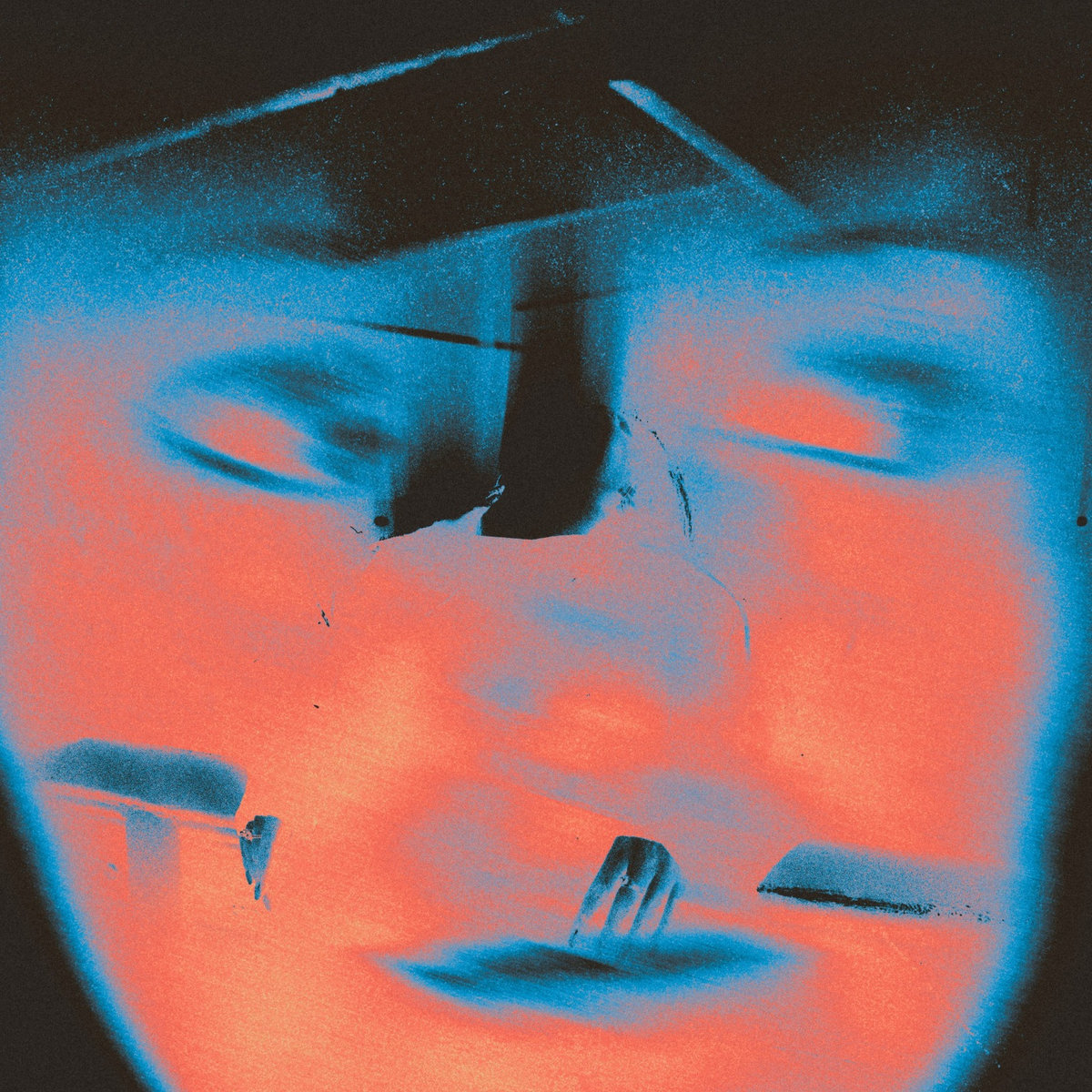
The visual artwork follows the same philosophy. Human forms appear almost like heat signatures disappearing into darkness, surrounded by deep blues and burning oranges. Bodies become abstract shapes, halfway between physical presence and emotional residue. It feels like the visual equivalent of the music itself, people attempting to create warmth inside environments that remain fundamentally cold.
What ultimately makes Spare Me the Rapture such an important release for Sunstinger is the sense that the band have expanded without abandoning anything essential. Their earlier cinematic atmosphere remains intact, but the rhythms now move harder, the guitars occupy wider spaces and the songwriting feels increasingly confident.
There is vulnerability beneath the volume too. The lyrics deal with numbness, panic, memory, environmental identity and altered states of consciousness with an honesty that prevents the enormous production from becoming merely impressive sound design.
With Spare Me the Rapture, Sunstinger deliver their most complete and adventurous work so far. Shoegaze remains the foundation, but noise rock, dream pop, post punk and heavier alternative textures now push against it from every direction.
A beautiful and bruising six track journey through industrial landscapes, emotional exhaustion and distorted memory, where Sunstinger discover that sometimes surviving the darkness begins by admitting that part of you has already learned to call it home.
© Thusblog
Listen on Qobuz (Hi-res 24 bit)