

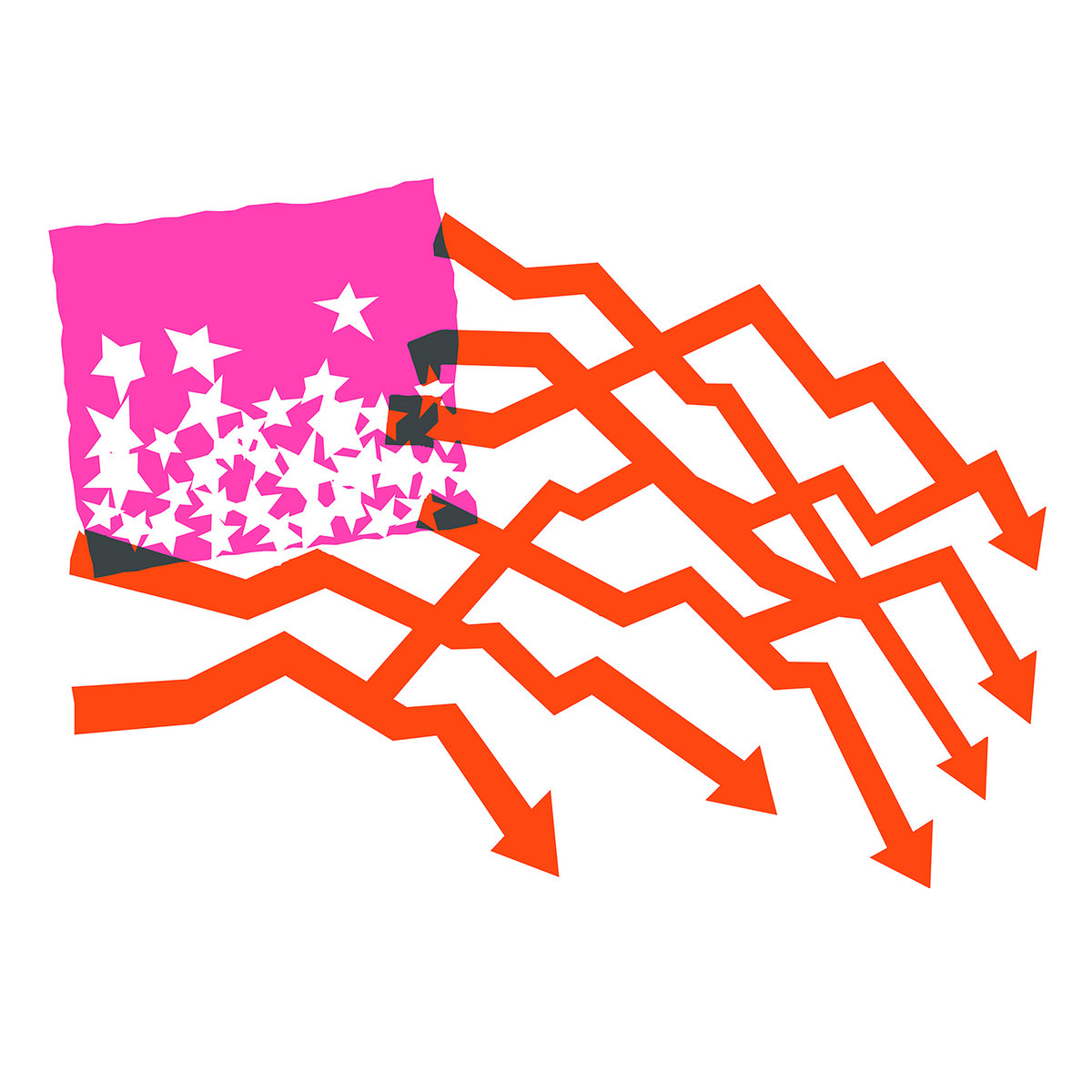
DIIV - ZIRP!
Indie Rock / Shoegaze / Experimental Pop – Brooklyn, New York – October 30, 2026
Few bands have contributed as much to the evolution of contemporary American shoegaze as DIIV. Since emerging from Brooklyn's independent music scene in 2011, the group have continually reshaped their sound, moving from the shimmering, dreamlike guitars of their early recordings towards increasingly dense, experimental and emotionally complex compositions. With their fifth studio album, ZIRP!, released on October 30, 2026, DIIV take another unexpected step, embracing a more melodic and occasionally pop-oriented direction without abandoning the atmospheric intensity that has defined their music for fifteen years.
Formed around singer and guitarist Zachary Cole Smith, DIIV currently consist of Andrew Bailey on guitar, Colin Caulfield on bass and vocals, and Ben Newman on drums. Together, they have developed a distinctive musical identity that combines shoegaze, dream pop, indie rock and post-punk, frequently exploring darker subjects beneath layers of reverberated guitars and hypnotic rhythms.
Their debut album, Oshin (2012), introduced a luminous, almost weightless sound built around crystalline guitar melodies and repetitive instrumental patterns. Is the Is Are (2016) expanded that approach with more elaborate songwriting, while Deceiver (2019) marked a significant change towards heavier distortion, abrasive textures and a more introspective atmosphere.
By the time Frog in Boiling Water appeared in 2024, DIIV had developed an increasingly unsettling musical universe. Its dense guitars and distant vocals reflected a broader examination of social deterioration, political uncertainty and the gradual normalisation of conditions that might once have seemed unacceptable.
Two years later, ZIRP! continues that critical perspective, but its musical character is noticeably different.
Released through Fantasy Records, the eleven-track album runs for approximately forty-one minutes and introduces an unexpected collaborator in British producer A. G. Cook, best known for his experimental electronic productions and his work with artists such as Charli XCX.
On paper, the combination might appear unusual. DIIV have long been associated with guitar-driven atmospheric rock, while Cook's reputation is closely connected to electronic pop and unconventional digital production. Yet this meeting of different musical worlds provides the album with some of its most interesting qualities.
Rather than replacing the band's instruments with electronic arrangements, Cook encourages a more open and dynamic approach to their existing sound. The guitars remain central, but the production introduces greater separation between instruments, more prominent vocal melodies and occasional synthetic textures that bring a different character to the compositions.
The album's title refers to Zero Interest Rate Policy, an economic term describing a period of exceptionally low interest rates. It also provides a starting point for the record's examination of contemporary capitalism, technological corporations, financial speculation and an increasingly digitised society.
These concerns connect ZIRP! with its predecessor, although DIIV now approach them through music that often sounds brighter and more accessible than the subjects might suggest.
Opening track “The Fountain,” introduced as the album's first single in August 2026, establishes this contrast immediately. The familiar weight of DIIV's distorted guitars remains, but the arrangement incorporates electronic details and a more clearly defined melodic structure, suggesting a band interested in exploring new possibilities rather than repeating its previous achievements.
“Kid” reveals an even more direct approach to songwriting, with an emphasis on vocal melody and carefully balanced instrumentation. Its accompanying video, directed by Jaxon Whittington, adopts a child's perspective, introducing a more personal dimension to an album otherwise concerned with large and often impersonal social structures.
One of the record's most intriguing compositions is “Trillions,” which brings Cook's electronic influences further into the foreground. Mechanical rhythms, processed vocals and catchy melodic ideas create an unexpectedly playful atmosphere, contrasting with the song's ironic examination of wealth accumulation and society's obsession with ever-increasing numbers.
Elsewhere, “Dare Me” and “Underground” retain more of the band's familiar abrasive character. Their heavier guitar textures provide a connection with the darker sound of Deceiver and Frog in Boiling Water, although the arrangements introduce additional movement and electronic detail.
“Evangelizer” continues the album's critical perspective with a more intense musical approach, while “My Star” offers a contrasting moment of intimacy, reflecting the importance of family, personal relationships and the emotional changes associated with parenthood.
Closing track “Idiot in the Sky” moves towards a lighter, more atmospheric sound, providing a fitting conclusion to a record that repeatedly moves between anxiety and the possibility of renewal.
The album also carries a deeply personal significance for Zachary Cole Smith. In January 2025, he and his family lost their home during the devastating wildfires in the Los Angeles area. That experience, together with the responsibilities and emotional changes of becoming a parent, adds another dimension to the record's reflections on instability, loss and rebuilding.
These personal experiences sit alongside the album's wider social concerns, creating an interesting relationship between the fragility of individual lives and the larger economic and political systems that influence them.
What makes ZIRP! particularly interesting is that DIIV seem increasingly comfortable allowing their melodies to emerge from beneath the distortion. Their music remains atmospheric and occasionally abrasive, but there is now a greater willingness to explore direct songwriting, unusual electronic textures and arrangements that leave more space for individual instruments.
Some listeners who particularly appreciate the dense, oppressive atmosphere of Deceiver may find this new direction surprising. However, the change feels consistent with a band that has never been particularly interested in remaining confined to one interpretation of shoegaze.
The collaboration with A. G. Cook is especially significant in this respect. His production introduces a contemporary experimental sensibility without erasing the group's musical identity, allowing DIIV to explore the relationship between organic instrumentation and digital manipulation.
With ZIRP!, DIIV deliver an adventurous fifth album that combines the immersive guitars of shoegaze with a renewed interest in melody, electronic experimentation and more immediate songwriting.
Behind its occasionally brighter musical character lies a thoughtful examination of modern society, technological dependence and the uncertainties of contemporary life. Yet there is also a growing sense of humanity and hope, suggesting that even within an increasingly unstable world, personal connections and creative renewal remain possible.
Fifteen years after their formation, DIIV continue to demonstrate that shoegaze is far from a static musical genre. ZIRP! finds them looking beyond familiar boundaries, embracing change while retaining the emotional depth and atmospheric beauty that made their music so compelling in the first place.
© Thusblog