
Slow Fiction - Dollhouse
Released August 7, 2026 | Garage Rock / Indie Rock
There is something immediately New York about Slow Fiction, but not in the sense of a band deliberately trying to recreate one particular period of the city’s musical history. Instead, they seem to have absorbed several generations of New York guitar music and allowed those influences to collide naturally: the urgency of garage rock, the angular movement of post-punk, the melodic instincts of indie rock and, increasingly, the blurred edges of shoegaze and dream pop. On their debut album Dollhouse, released on August 7, 2026, all of those elements finally seem to occupy the same room.
Slow Fiction emerged from Brooklyn in the early 2020s and consists of Julia Vassallo on vocals, Paul Knepple and Joseph Skimmons on guitars, Ryan Duffin on bass and Akiva Henig on drums. The group began taking shape around 2021, just as New York’s live music scene was beginning to breathe again after the pandemic. That context feels significant because Slow Fiction has always sounded like a band built through playing together rather than musicians carefully assembling songs one piece at a time.
Their self-titled EP, released in February 2023, provided the first substantial introduction to the group, already revealing the contrast that would become central to their music. Guitars could be sharp and physical one moment, then suddenly dissolve into something much more spacious, while Vassallo’s voice remained the emotional centre of the songs. There were traces of the nervous electricity associated with bands such as Yeah Yeah Yeahs, Interpol and The Walkmen, but also a softer and stranger melodic instinct that suggested Slow Fiction were never going to remain confined to straightforward garage or post-punk.
The Crush EP followed in May 2024 through So Young Records and pushed that identity considerably further. Songs including Monday, Apollo, End of the Night, There Were Stars in Your Eyes and January showed a band becoming increasingly comfortable with contrast. Noise and melody were no longer competing for space. They were beginning to depend upon one another.
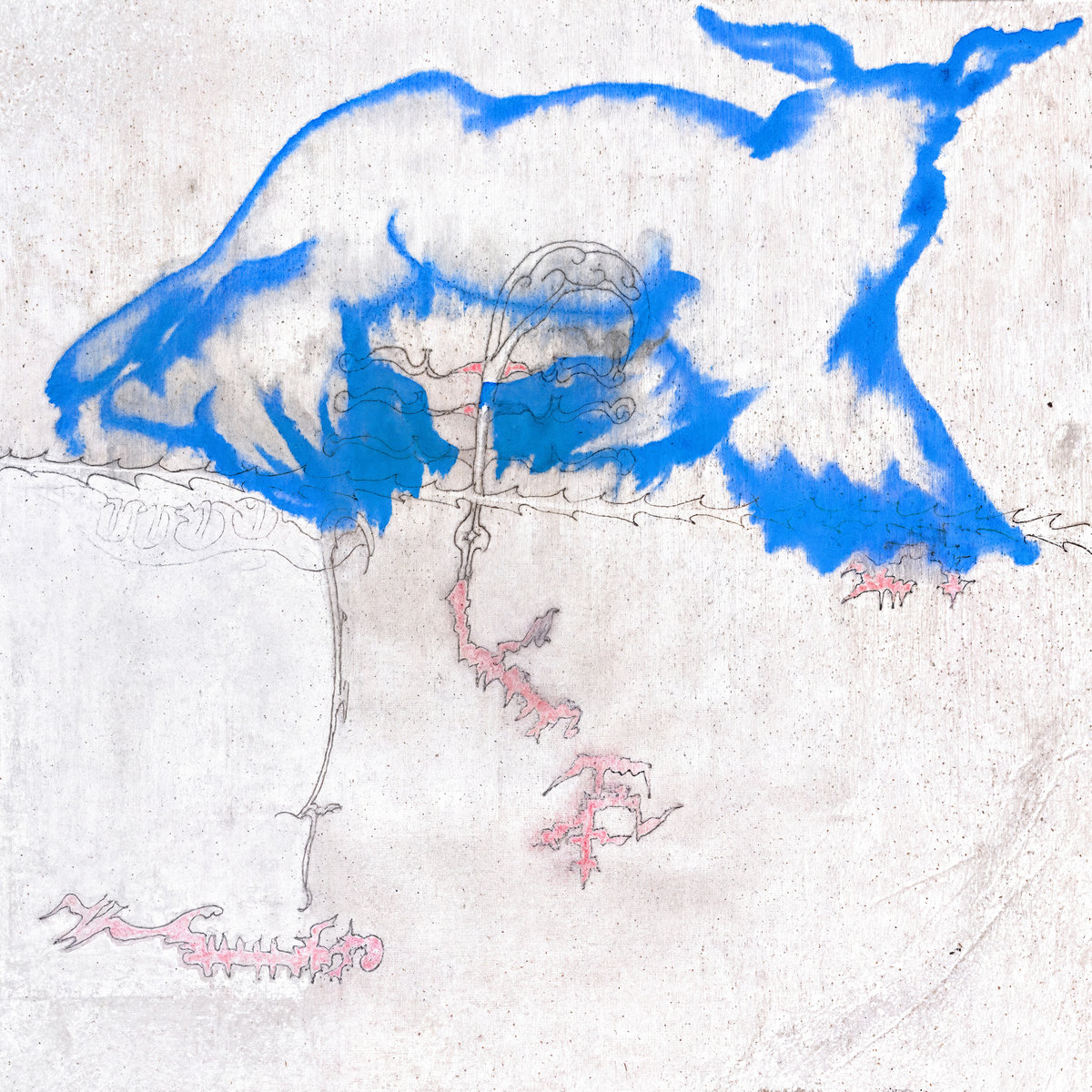
That evolution reaches a much more complete form on Dollhouse, Slow Fiction’s first full-length album. Released through the independent label Tight Knit, the record contains eleven songs: junior year, ninetynine, mouthpiece, what the night told me, bottle episode, idle hours, g.a.l.s., dollhouse, satellite, heavy metal and turning down flowers. The music was composed collectively by the five members, with Vassallo writing the lyrics. Slow Fiction produced the album themselves, while Sonny DiPerri, whose previous work includes DIIV and Julie, handled the mix, and Carl Saff completed the mastering.
What strikes me most about Dollhouse is how little it sounds like a debut album made by a band desperately trying to prove everything at once. There is ambition here, certainly, but Slow Fiction are increasingly comfortable leaving empty spaces inside their music. The guitars can still erupt, but they are just as effective when they shimmer somewhere in the distance. The rhythm section can drive a song forward with post-punk urgency and then suddenly allow it to breathe.
That sense of freedom partly comes from the way the album was created. Rather than arriving in a studio with eleven finished songs waiting to be recorded, Slow Fiction allowed the material to change over a much longer period. An important part of the writing took place while the band spent time together in upstate New York during the winter of 2025, with the process continuing between their Brooklyn rehearsal space and work completed on the Californian coast. The result feels less like five musicians performing predetermined roles and more like a group gradually discovering what each song wants to become.
The musical palette has expanded accordingly. There are still plenty of jagged guitars and moments of garage-rock immediacy, but Dollhouse introduces considerably more atmosphere than the band’s earlier work. Reverb spreads around the edges of songs, guitars overlap and blur into one another, and passages of shoegaze and dream pop appear without overwhelming the fundamental indie-rock songwriting underneath them. Mellotron, pump organ and vocoder also enter the picture, giving certain sections a strange depth that would have been difficult to imagine from their earliest recordings.
Slow Fiction have mentioned artists including Yo La Tengo and Cocteau Twins, along with Broken Social Scene’s You Forgot It in People, when discussing some of the musical territory surrounding the album. Those references make sense, particularly in the willingness to let songs expand beyond conventional guitar-rock arrangements. Yet Dollhouse never feels particularly interested in impersonating its influences. The ghosts are visible, but Slow Fiction have rearranged the furniture.
More importantly, there is a concept holding the record together.
The image of the dollhouse is beautifully simple. Imagine looking into a miniature house where every room is exposed at the same time. Walls that normally protect private life have disappeared. Bedrooms, kitchens and living rooms are suddenly part of the same display, and the people inside can be observed without necessarily knowing exactly who is watching them.
It is difficult to imagine a more appropriate metaphor for living now.
Throughout Dollhouse, Julia Vassallo returns to questions surrounding identity, observation and performance. Who are we when nobody is watching? How much of ourselves is genuine when we know that somebody might be looking? And after years of carrying cameras in our pockets and voluntarily placing fragments of our lives online, is there even such a thing as being completely unobserved anymore?
That tension gives the album a very contemporary uneasiness. Social media encourages us to become both the person living an experience and the person standing outside it, watching ourselves live it. A meal becomes a photograph before it has been eaten. A concert becomes a video while it is still happening. Even sadness can acquire framing, lighting and an audience. Slowly, almost without noticing, we begin decorating our own little rooms inside the dollhouse.
Ninetynine captures that sensation particularly well. Musically, it has the nervous forward movement of post-punk, but underneath that energy lies an interesting observation about the way we romanticise our own existence. There is something almost cinematic about imagining yourself as the protagonist of an invisible film, except the joke in 2026 is that the camera is no longer imaginary. Most of us carry it ourselves.
Satellite approaches the same world from a darker direction. Here, the constant flow of information becomes exhausting rather than seductive. We can watch disasters, wars, arguments and suffering unfold almost continuously, yet that extraordinary access to other people's realities does not necessarily make us more compassionate. Sometimes it simply makes us numb. The more windows we open onto the world, the easier it can become to close ourselves inside increasingly narrow communities of people who already think exactly as we do.
That contradiction fascinates me throughout Dollhouse. We have never been able to see so much of one another, yet seeing does not automatically mean understanding.
The album’s longest song, turning down flowers, pushes those ideas into even more uncomfortable territory. Stretching beyond six minutes, it gives Slow Fiction room to move away from the compactness of their more immediate songs and build something considerably more expansive. The track examines the ways women are observed and represented, and how even female pain can become aestheticised, consumed and transformed into cultural material.
It is an appropriate ending because Dollhouse gradually becomes less interested in simply asking who is watching and more concerned with what happens to us when observation becomes permanent.
Yet this would all feel rather academic if the music did not possess such physical energy. Fortunately, Slow Fiction understand that ideas work better in rock music when they are allowed to sweat.
The guitars throughout Dollhouse can be abrasive, dreamy, melodic and occasionally enormous. Henig’s drums frequently give the songs a restless momentum, while Duffin’s bass provides the weight beneath arrangements that might otherwise float away. Knepple and Skimmons rarely seem interested in simply doubling one another; their guitars can collide, separate and occupy different depths of the mix. Against all of this, Vassallo’s vocals provide the human presence inside the architecture.
It is this combination that makes Dollhouse particularly interesting to me. There is enough distortion and atmosphere here for listeners coming from shoegaze, enough rhythmic tension for post-punk listeners and enough immediate songwriting for anyone primarily interested in indie rock. Occasionally, several of those identities appear inside the same song.
Comparisons with Yeah Yeah Yeahs, Interpol, Yo La Tengo, Cocteau Twins, Broken Social Scene or even Swervedriver can help locate Slow Fiction on a musical map, but Dollhouse ultimately works because the group is beginning to make those coordinates irrelevant. Their influences belong to different decades and slightly different scenes, yet they are being used to examine something unmistakably contemporary.
The album arrived at an interesting moment for the band as well. Slow Fiction celebrated its release with a show at TV Eye in Brooklyn on August 8, immediately after the record appeared, before heading out for North American dates supporting Swervedriver. There is something rather fitting about that pairing. Slow Fiction may not be a traditional shoegaze band, but the increasing scale and texture of their guitars places them comfortably alongside a group that helped demonstrate decades ago that melody and enormous amounts of guitar noise need not be enemies.
For me, Dollhouse feels like the point where Slow Fiction stops being merely a promising Brooklyn guitar band and becomes something considerably harder to categorise. The rawness remains, but the rooms have become larger. The guitars still bite, but now they also drift. The melodies are stronger precisely because the band is no longer afraid of allowing noise, silence and atmosphere to surround them.
And perhaps that is why the title works on another level. A dollhouse initially looks small enough to understand completely. You can stand outside it and convince yourself that you can see every room, every object and every tiny person inside.
But look closely enough and suddenly there are stories everywhere.
With Dollhouse, Slow Fiction have opened the walls and invited us to look inside. What we find there is messy, anxious, noisy, intimate and occasionally beautiful, which sounds rather like being alive in 2026.
© Thusblog