
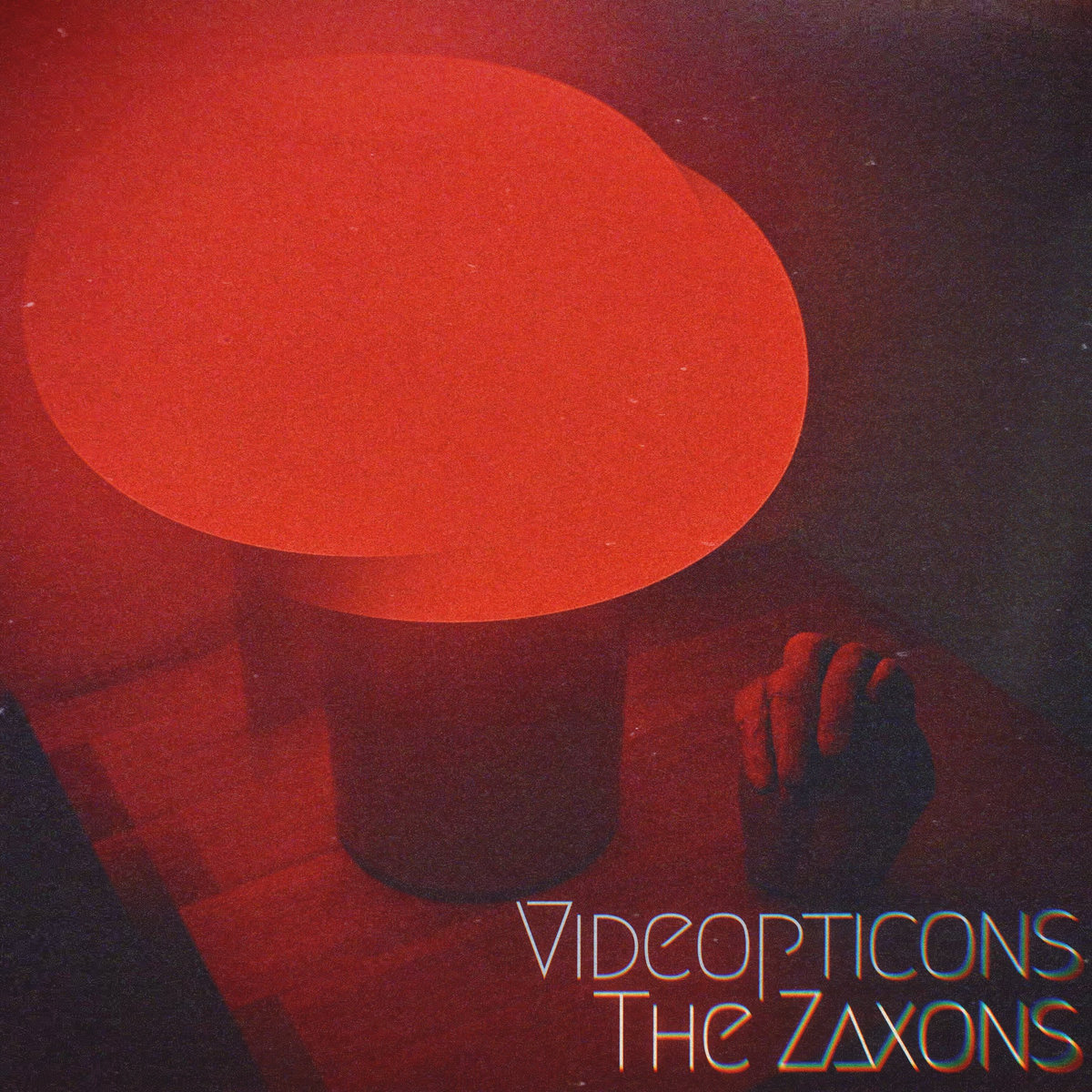
The Zaxons - Videopticons
New Wave / Post-Punk / Psychedelic – Vancouver, Canada – 2026
There is something wonderfully peculiar about The Zaxons, a Vancouver trio whose music seems to have emerged from a forgotten corner of the early 1980s, when post-punk was still an unpredictable playground for angular guitars, restless basslines and primitive electronic experimentation. Their album Videopticons revisits that fascinating period without becoming another exercise in nostalgia, offering eight tracks of nervous, inventive and surprisingly melodic guitar music.
The band consists of Julian Growcott (guitar and vocals), Dave Charan (bass and vocals) and Ben Wilson (drums and synthesizers). Together, they create a sound that draws upon the sharp minimalism of Wire, the sophisticated post-punk of Magazine, the electronic eccentricity of Gary Numan and the darker atmospheres of The Cure. There are also similarities with more contemporary bands such as Preoccupations and Women, particularly in the way The Zaxons combine repetitive rhythms with unconventional guitar arrangements.
What immediately stands out on Videopticons is the importance of the bass. Rather than simply supporting the guitars, Charan's playing frequently drives the compositions, creating insistent melodic patterns around which the other instruments develop. Growcott's guitar work is deliberately economical, favouring clipped chords, abrasive textures and unexpected melodic fragments, while Wilson's drums and synthesizers add a slightly mechanical character to the arrangements.
Opening track “Keswick Cutouts” introduces this approach with a driving bassline, buzzing electronics and a restless energy that immediately establishes the album's character. The title track, “Videopticons,” explores a darker atmosphere, combining the tension of early British post-punk with a distinctly psychedelic edge. “Mumpsimus” introduces a more playful melodic sensibility, demonstrating the band's ability to make unusual arrangements sound surprisingly accessible.
One of the album's highlights is undoubtedly “Adrian Knows,” a wonderfully infectious composition that brings together angular guitars, an energetic rhythm section and Growcott's unmistakably British vocal delivery. The song manages to sound both awkward and catchy, with its shifting instrumental patterns providing an interesting contrast to the immediacy of the melody.
Its inspiration comes from Adrian Mole, the painfully self-conscious teenage character created by British author Sue Townsend. Growcott uses this reference to revisit the frustrations of adolescence, particularly the experience of feeling socially uncomfortable while surrounded by the prejudices and arrogance of classmates and teachers.
The accompanying video, released on October 26, takes the viewer through Vancouver during the 1970s and 1980s, exploring the city through the eyes of a young person discovering music, literature, art and cinema. It adds a nostalgic but slightly unsettling dimension to a song already filled with personality.
Elsewhere, the album continues to explore the more eccentric possibilities of post-punk. The synthesizers often sound deliberately primitive, recalling the electronic experiments of the late 1970s and early 1980s, while the guitars alternate between sharp, almost mathematical patterns and more atmospheric passages.
Closing track “Television Play” is particularly effective, with its heavy bass, ghostly guitar textures and distorted electronic atmosphere creating the impression of an old television broadcast gradually disappearing into interference.
There is also a strong psychedelic element running through the record, although it rarely takes the form of conventional swirling guitars or extended instrumental passages. Instead, The Zaxons introduce strange sounds, unexpected rhythmic changes and slightly disorientating arrangements that give their music an unusual character.
What I particularly enjoy about Videopticons is that it never feels overly polished or predictable. The songs have a raw, occasionally abrasive quality, yet beneath those unconventional arrangements are some genuinely excellent melodies. The band clearly understand the importance of a memorable hook, even when they seem determined to surround it with as many peculiar musical ideas as possible.
The influence of British post-punk is obvious, but there is enough individuality here to prevent The Zaxons from sounding like a tribute to another era. Their music captures the experimental spirit of those early recordings rather than simply reproducing their sound, and that distinction makes a considerable difference.
Videopticons is an album that should appeal to anyone who appreciates the more adventurous side of new wave and post-punk, particularly listeners who enjoy Wire, Magazine, The Chameleons, early Cure or the angular guitar music of the Canadian underground.
With eight inventive compositions, strong basslines, eccentric electronic textures and an impressive collection of melodies, The Zaxons have created an album that feels refreshingly different from much of today's post-punk revival.
A little strange, occasionally unsettling and full of character, Videopticons is well worth discovering, especially if you appreciate bands that are not afraid to take familiar influences somewhere unexpected.
© Thusblog